A hydraulic system is as clean as the dirtiest oil it ever held
Most hydraulic failures are decided before the first running hour, by what was inside the pipe when it was filled.
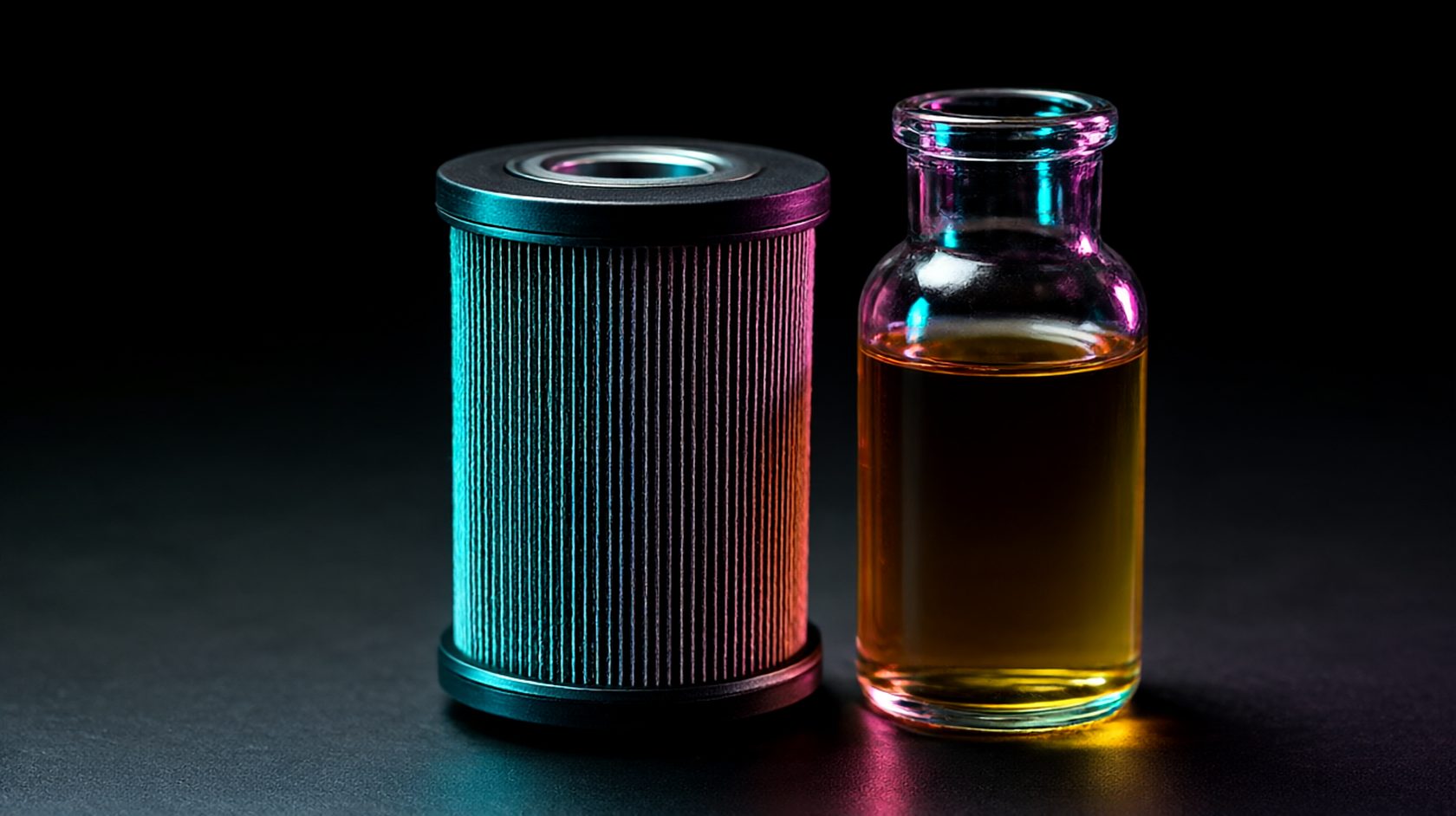
The first fill decides the next decade
A hydraulic system's life is often set on the day it is filled, and the people who fill it are usually the ones with the least authority over its cleanliness. Pipe cut on site, hoses assembled on site, adaptors opened on site and fittings lubricated with whatever grease was near.
The damage is not immediate. Contamination enters, passes through the pump once, and abrades a clearance that was designed to three microns. The pump then produces more particles, which abrade more clearances, and the progression is self sustaining.
The cost of getting the first fill right is a filter and a flushing procedure. The cost of getting it wrong is a pump, then a valve block, then an argument about who supplied the oil. The interval between those events is long enough that nobody connects them.
This is why cleanliness belongs in commissioning rather than in maintenance. By the time maintenance sees the oil, the first generation of damage has already been done, and the oil is a record of it rather than a cause.
What a cleanliness code actually measures
The ISO 4406 code reports three particle counts, at sizes above four, six and fourteen microns, each expressed as a class number. The class number is a logarithmic bucket, so one step on the code is a doubling of the particle population.
The three sizes correspond to three different damage mechanisms. Particles near four microns sit in the gap between moving surfaces and cause slow wear. Particles near fourteen microns are large enough to block orifices and to jam spools. Particles in between do both, less elegantly.
A system specified at a cleanliness class and a system measured at that class are different things, because the measurement depends on the sampling point, the bottle, the analysis method and the moment. A sample taken from a return line during a cold start is not the system's cleanliness, it is the cleanliness of the moment.
The useful discipline is to fix the sampling point and the condition along with the target class. Same port, same temperature band, same running state, same laboratory. The number is then a trend, and a trend is what a maintenance plan can use.
Where the dirt comes from during build
The largest single source is pipe and tube that was cut and threaded without being cleaned afterwards. A thread cut produces swarf, and swarf in a thread is swarf in the oil, because the joint is the pipe's inside.
The second source is hose assembly. A hose cut with a saw produces a cloud of rubber and steel, and a hose assembled without being blown through carries that cloud into the circuit at the first pressure cycle.
The third is the components themselves. A valve block, a cylinder, a manifold arrives with a preservation fluid and a manufacturing residue, and the residue is invisible until it is in the oil. Components that are opened for a modification on site are the worst case, because the opening happens in the dirtiest environment available.
The fourth is the reservoir. A tank welded and painted is a tank with weld scale and paint overspray, and the tank is upstream of everything. A reservoir that is not inspected and cleaned before first fill will deliver its residue for months.
Flushing is a procedure, not a duration
Flushing is commonly specified as a number of hours, and a number of hours is not a procedure. A flush works by moving oil fast enough to carry particles out of the places where they settle, and by filtering that oil aggressively while it moves.
The flow during a flush should exceed the working flow, typically by a factor between one and a half and two, so that the velocity in the pipes is high enough to suspend rather than to deposit. Flushing at working flow leaves the low velocity sections untouched, and the low velocity sections are where the particles are.
Temperature matters because viscosity decides whether a particle can be carried. A flush at ambient temperature in a cold workshop moves oil that is too viscous to sweep the small passages, and it produces a clean sample from a dirty circuit.
The finish condition is a measurement, not a clock. Flush until the sample at the specified point reaches the target class, and then flush a further period proportional to the circuit's size, because the last particles come out slowly. A flush that stops on the hour instead of on the sample is a flush that stops early.
Filtration during the flush, and after
Flushing filtration is usually done with an off-line filter and a dedicated flushing rig, because the machine's own return filter is often too small to process the flow required. The rig's filter should be absolute rated, not nominal, and its element should be changed when the differential pressure indicates, not on a schedule.
After commissioning, the machine's filters should start life new and should be recorded with their part numbers. A machine handed over with filters of unknown history is a machine whose first failure will be attributed to contamination that nobody can date.
The return filter's rating is the system's practical cleanliness floor. A ten micron nominal return filter cannot deliver a system cleaner than a ten micron nominal filter, whatever the flush achieved. Filter rating and target class have to be consistent, and they frequently are not.
Bypass valves on filters are a component that deserves attention at commissioning, because a filter that has been bypassing since installation looks exactly like one that has been filtering. The indicator is the only evidence, and the indicator should be checked during the flush and at handover.
Water is the second contaminant and the harder one
Water enters a hydraulic system through the reservoir's breather, through cylinder rod seals on a wet machine, through cooling heat exchangers with a pinhole, and through oil delivered in a drum that was stored outside.
The damage water does is different from the damage particles do. Water reduces the oil film's load capacity, promotes corrosion on ferrous surfaces, and reacts with some additives to form deposits that then act as particles. A system with free water fails faster than a system with the same particle count and no water.
Detection is by sampling, and the useful measures are the water content in parts per million and the oil's appearance. Free water is visible as cloudiness; dissolved water is not, and dissolved water above the oil's saturation point will become free water at a cold start.
Removal at commissioning is usually by a vacuum dehydrator or by a coalescing filter on the flushing rig. Removal in service is by keeping the breather dry, by fixing the leak that admits water, and by not storing oil in a way that lets it absorb.
Temperature and viscosity change what fits
A hydraulic system is designed around a viscosity band, and the band is narrow in the sense that both ends are failures. Too viscous and the pump cannot fill its own inlet, which produces cavitation and damage within minutes. Too thin and the clearances leak internally, which produces heat and lost motion.
The first start is the worst case for the viscous end, because the oil is at ambient and the ambient may be five degrees. A pump started cold at full flow is a pump that has been asked to do something it was not designed for, and the damage is often inaudible.
The practical measures are a sump heater used before start, a restriction on starting flow until temperature rises, and a temperature gauge that the operator actually reads. A cold start procedure written on the panel is worth more than one written in a manual.
At the hot end, the reservoir's temperature control matters. A system that stabilises twenty degrees above its design point has oil that is one viscosity grade too thin, and every clearance in the circuit is passing more flow than it should.
The first line checks that catch most problems
Level, temperature, pressure, and the filter indicator. Four checks, done at the start of every shift, catch the majority of hydraulic problems before they become failures. None of them requires training beyond a few minutes.
The fifth check is the visual one: look at the oil. Cloudy oil has water. Dark oil has oxidized. Oil with a metallic sheen has a pump or a cylinder in trouble. Oil with a foam on top has air entrainment, which is usually an inlet problem.
The sixth is the sound. A pump that has begun to cavitate changes its note before it changes any gauge. Operators who know their machine's sound are the cheapest condition monitoring available, and their observations deserve a place in the record.
The point of a first line check list is not to find everything, it is to make the transition from normal to abnormal visible early. Every check on the list should have a normal band written beside it, because a check without a band is a check without a verdict.
Sampling points and the interval between them
A sample is only useful if it is taken where the oil represents the system rather than a corner of it. The standard is a port on the return line upstream of the filter, or a dedicated sample valve on the pressure line, taken after the oil has circulated.
Sampling from the reservoir's top is sampling the oil that has had time to settle, which is the oil that is not doing the work. Sampling from a drain plug is sampling the sludge. Neither is wrong, both are answering a different question than the one a cleanliness target asks.
The interval should be short at the beginning and long later, because the rate of change is highest in the first weeks. A common pattern is weekly for the first month, monthly for the first quarter, and then quarterly against a trend.
Every sample should carry its context on the bottle: machine, port, date, running hours, oil temperature, and the reason for sampling. A laboratory report without that context is a set of numbers that cannot be acted on.
The first line checks and the sampling discipline described here are the ones first line hydraulic system maintenance expects an operator to run between services.
- Pipe and tube are cleaned after cutting and threading, before assembly.
- Hose assemblies are blown through before connection.
- The reservoir is inspected and cleaned before the first fill.
- Flush flow exceeds working flow by a factor of one and a half to two.
- Flush temperature is high enough for the oil to carry particles.
- The flush finishes on a sample at the specified class, not on an elapsed time.
- Flushing filtration is absolute rated, with the element changed on differential pressure.
- The machine's own filters start life new, with part numbers recorded.
- Return filter rating is consistent with the target cleanliness class.
- Filter bypass indicators are checked during flushing and again at handover.
- Water content is measured in ppm, and free water is looked for visually.
- A cold start procedure is written on the machine and not only in the manual.